


Why Traditional UV Nail Lamps Are Holding Salons Back
2024-05-25 16:47:32
Click:
“
Traditional UV and LED nail lamps have been used in salons for years. However, many conventional designs were created for fixed salon stations rather than the flexible working methods used by modern nail technicians.
Bulky housings, fixed curing angles, power cords and limited portability can make everyday services less convenient. These limitations become more obvious during detailed nail work, pedicures, mobile appointments and home-based salon services.
For nail brands, distributors and sal
”
Why Traditional UV Nail Lamps Are Holding Salons Back
Industry News | Nail Care Devices | Professional Salon Equipment
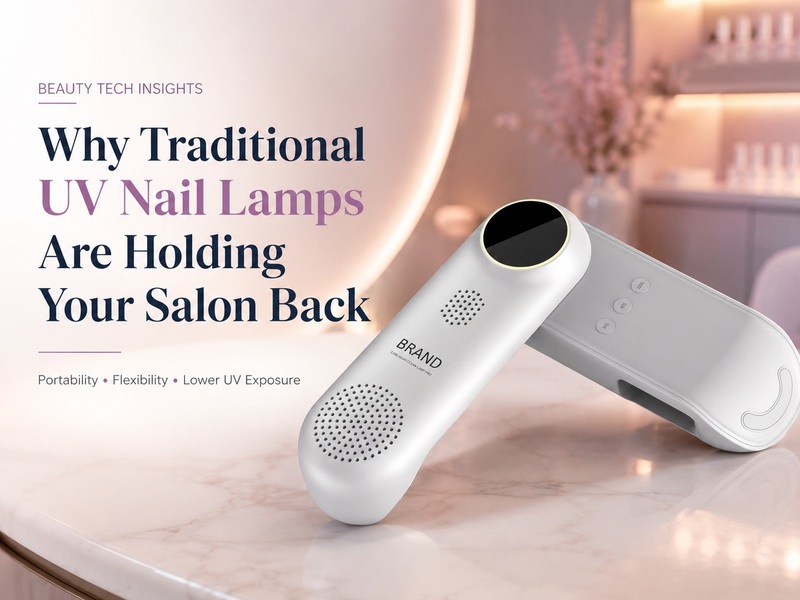
Traditional UV and LED nail lamps have been used in salons for years. However, many conventional designs were created for fixed salon stations rather than the flexible working methods used by modern nail technicians.
Bulky housings, fixed curing angles, power cords and limited portability can make everyday services less convenient. These limitations become more obvious during detailed nail work, pedicures, mobile appointments and home-based salon services.
For nail brands, distributors and salon equipment buyers, the next generation of nail lamps should not only provide curing power. It should also improve workflow, flexibility, user comfort and product positioning.
The Limitations of Traditional Nail Lamps
Traditional nail lamps can still perform basic curing tasks, but their structure may not fit every modern service environment. The main limitations usually involve positioning, mobility and the amount of area exposed during curing.
1. Fixed Angles Limit How Technicians Work
Many conventional nail lamps are designed for a hand to enter from one fixed direction. This may be acceptable for standard manicures, but it can become inconvenient during detailed work, single-nail repairs, flash curing or pedicure services.
Technicians may need to reposition the client’s hand, move the lamp repeatedly or work at an uncomfortable angle. Over time, these small adjustments can affect workflow efficiency and technician comfort.
A more flexible lamp should support:
- Full-hand curing
- Single-nail flash curing
- Pedicure work
- Different hand and foot positions
- Detailed nail art and extension work
2. Repositioning Can Slow Down Services
In a busy salon, repeated repositioning can add unnecessary time to each service. Moving the lamp, adjusting the hand and repeating the curing process may appear minor, but these actions accumulate throughout the working day.
A lamp that can be adjusted or folded into different working positions can help technicians move more smoothly between preparation, flash curing and complete curing.
For salon owners, improving a few minutes in each appointment may help create a more efficient service flow without requiring technicians to work faster or compromise precision.
3. Traditional Plug-In Lamps Are Less Suitable for Mobile Work
Mobile nail technicians, home-based studios and training academies are creating new demand for portable salon equipment. Traditional plug-in lamps can be inconvenient when power outlets are limited or when equipment must be moved between workstations.
A rechargeable nail lamp can support a cleaner workstation and provide more flexibility for technicians who work in different locations.
Important portability features include:
- Rechargeable battery
- USB Type-C charging
- Compact or foldable structure
- Lightweight design
- Stable curing output at different battery levels
- Easy storage and transport
4. Clients Are Paying More Attention to UV Exposure
Clients are becoming more aware of the equipment and processes used during beauty treatments. Although nail lamps are designed for controlled curing, some customers may still prefer products that reduce unnecessary exposure to surrounding skin.
A targeted or adjustable curing design can focus light more closely on the nail area instead of exposing a larger area than necessary.
For brands and distributors, this creates an opportunity to position a modern nail lamp around controlled curing, convenience and client-conscious design rather than only promoting wattage.
What Modern Nail Lamps Should Deliver
A modern nail lamp should be designed around actual working conditions. It should provide reliable curing performance while making the device easier to position, transport and use across different services.
| Feature | Why It Matters |
|---|---|
| Portability | Supports mobile technicians, home studios and flexible workstations |
| Adjustable Structure | Helps accommodate hands, feet and different curing angles |
| Targeted Curing | Helps limit unnecessary exposure outside the working area |
| Multiple Timers | Supports different gels, curing stages and service routines |
| Rechargeable Operation | Reduces dependence on fixed power outlets |
| 365 nm + 405 nm LEDs | Supports compatibility with common gel systems |
A Nail Lamp Is Part of the Salon Experience
Salon equipment is increasingly visible in social media content, training videos and customer photos. A bulky or outdated device can affect the appearance of the workstation, while a compact and distinctive design can support a more modern brand image.
For nail brands, a well-designed lamp can become more than a functional device. It can become part of a complete gel nail system, starter kit or professional equipment range.
- Professional salon equipment bundles
- Gel polish starter kits
- Mobile technician sets
- Academy and training kits
- Private label retail products
What Brands and Distributors Should Evaluate
When sourcing a professional nail lamp, buyers should compare more than maximum wattage.
- Wavelength compatibility
- Curing consistency
- Timer options
- Battery capacity and runtime
- Charging method
- Adjustability and folding stability
- Product weight and storage size
- Material quality and surface finish
- Logo, color and packaging customization
- Certification support for target markets
Frequently Asked Questions
Are traditional nail lamps still suitable for salons?
Yes, they can still be suitable for fixed workstation use. However, portable or adjustable models may offer more flexibility for detailed work, mobile services and pedicures.
What wavelengths should a professional nail lamp use?
Many professional LED nail lamps use a combination of 365 nm and 405 nm wavelengths to support common gel systems. Compatibility should still be confirmed with the intended gel products.
Are rechargeable nail lamps suitable for professional use?
They can be suitable when battery runtime, charging stability and curing performance are designed for repeated salon operation.
Can nail lamps be customized for private label brands?
Depending on the model and order requirements, customization may include logo, color, packaging, user manual, plug specifications, timer settings and selected accessories.
Conclusion
Traditional nail lamps are not automatically unsuitable, but they may not fully support the flexible working methods used by modern nail technicians.
For salon brands and distributors, portable, rechargeable and adjustable nail lamps create an opportunity to improve workflow, support different services and offer a more modern product experience.
Looking for a Foldable Nail Lamp for Your Brand?
Haojing manufactures nail lamps and professional nail care devices for OEM/ODM, wholesale and private label projects. Contact us to discuss sample orders, logo customization, color options, packaging and bulk pricing.









Contact

+18681541980

Beckli@vvpec.com

Building E, N.O 139, 2nd Chuangye Road, Baoan District, Shenzhen, China

Business Hours: Mon–Fri, 9:00–18:00 GMT+8
Follow and subscribe to us


Copyright © Haojing(Shenzhen) Technology Co., Ltd
