


What Makes a Nail Drill Truly Professional?
2024-05-25 16:57:52
Click:
“
Many nail drills are marketed as professional simply because they offer higher RPM, stronger torque or more power. However, for nail technicians, salon owners and product buyers, professional performance involves much more than the maximum number shown on a specification sheet.
Once a nail drill reaches a practical performance level for gel removal, shaping, polishing and refill work, the buying decision often shifts to other factors. Comfort, vibration stability, noise, portability, charging c
”
What Makes a Nail Drill Truly Professional?
Industry News | Nail Care Devices | Professional Salon Equipment
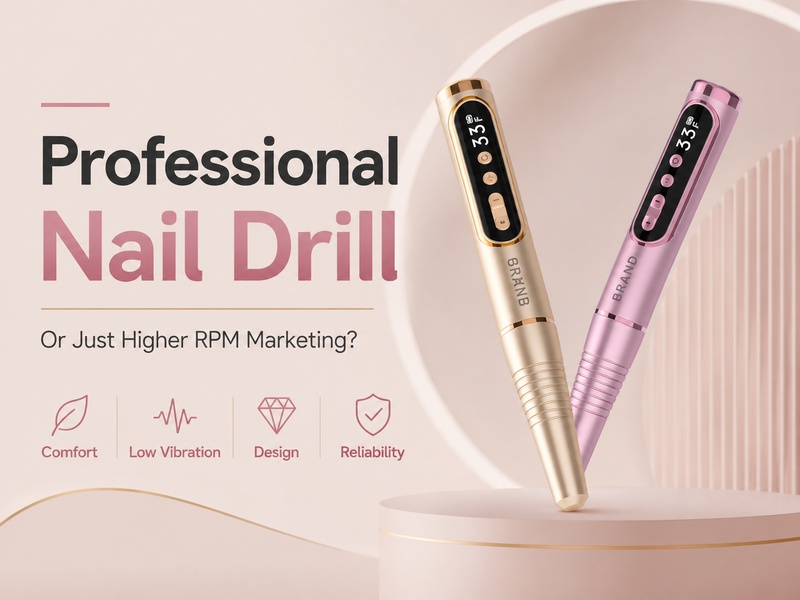
Many nail drills are marketed as professional simply because they offer higher RPM, stronger torque or more power. However, for nail technicians, salon owners and product buyers, professional performance involves much more than the maximum number shown on a specification sheet.
Once a nail drill reaches a practical performance level for gel removal, shaping, polishing and refill work, the buying decision often shifts to other factors. Comfort, vibration stability, noise, portability, charging convenience and long-term reliability can become more important than maximum speed.
Higher RPM Does Not Automatically Mean Better Performance
RPM describes how fast the drill rotates, but it does not fully explain how the device performs in real salon use. Two nail drills with similar speed specifications may feel very different in the technician’s hand.
A high-speed motor combined with poor balance, unstable internal components or an uncomfortable housing may create more vibration, heat and noise. These problems can reduce precision and make the device more tiring to use during long working hours.
For professional users, stable and controllable performance is usually more valuable than speed that is difficult to manage.
1. Comfort During Long Working Hours
A professional nail technician may use a drill repeatedly throughout the day. The weight, shape, grip and balance of the device can directly affect hand fatigue.
A nail drill that feels acceptable during a short product demonstration may become uncomfortable after six or eight hours of salon work. An ergonomic body and balanced internal structure can help reduce strain and improve control.
Important comfort factors include:
- Device weight and balance
- Grip diameter and surface texture
- Button position and ease of adjustment
- Heat generated during continuous operation
- Comfort for both left- and right-handed users
2. Low Vibration and Precision Control
Vibration is one of the most important indicators of the actual user experience. Excessive vibration can make detailed work more difficult and may create discomfort for both the technician and the client.
For cuticle preparation, shaping and controlled product removal, technicians need stable rotation and predictable response. A well-designed motor and transmission structure should help the drill remain smooth across different speed levels.
For brands and distributors, low vibration can also reduce complaints related to noise, hand fatigue and unstable operation.
3. Heat and Noise Control
Higher speed and power can create additional heat and noise if the internal structure is not properly designed. During daily salon use, these factors may affect comfort and product durability.
A professional nail drill should maintain reasonable operating temperature and controlled noise during normal use. This depends on motor quality, structural balance, ventilation and component selection rather than RPM alone.
4. Portability and Charging Convenience
Portable and rechargeable nail drills are becoming more relevant for mobile technicians, home-service professionals, academy students and salons that want a cleaner workstation.
However, portability should not mean sacrificing stability. Buyers should evaluate battery capacity, charging time, runtime, charging interface and whether performance remains consistent as the battery level decreases.
- Battery runtime for daily use
- USB Type-C or convenient charging options
- Clear battery level display
- Stable output at different battery levels
- Lightweight format for mobile technicians
5. Design and Salon Brand Image
Nail equipment is increasingly visible in salon photos, social media videos and training content. This means product appearance has become part of the salon environment and brand presentation.
For nail brands and private label buyers, a premium finish, consistent color palette, clear display and well-designed controls can make the product easier to position in professional and consumer markets.
Design should not replace performance, but a product that combines reliable function with a strong visual identity can create more value than a generic high-RPM device.
6. Reliability in Daily Salon Use
Professional salon equipment is used frequently and may be exposed to dust, repeated charging, transport and continuous adjustment. Long-term reliability therefore matters more than short-term sample performance.
Brands and distributors should evaluate:
- Motor stability during continuous use
- Housing and button durability
- Charging cycle reliability
- Resistance to vibration and internal wear
- After-sales risk and replacement rates
- Availability of accessories and compatible drill bits
A slightly lower maximum RPM may be a better commercial choice if the device provides more stable daily performance and generates fewer complaints.
What Brands and Distributors Should Compare
When sourcing a professional nail drill, buyers should compare real operating experience rather than relying only on RPM and torque claims.
| Evaluation Area | What to Check |
|---|---|
| Performance | Stable speed, usable torque and controlled response |
| Comfort | Weight, grip, balance and heat during long use |
| Vibration | Smooth rotation at low, medium and high settings |
| Battery | Runtime, charging time and output stability |
| Design | Display, controls, finish and private label potential |
| Reliability | Motor life, charging cycles and daily-use durability |
Professional Does Not Always Mean More Aggressive
The nail equipment market is gradually moving away from specification-only competition. A truly professional nail drill should be comfortable, stable, reliable and easy to use throughout the working day.
For salon brands, distributors and private label buyers, this creates an opportunity to position nail drills around real technician needs rather than only promoting maximum RPM.
Frequently Asked Questions
Is higher RPM always better for a nail drill?
No. Higher RPM can be useful for certain tasks, but stability, torque control, vibration, heat and user comfort also affect professional performance.
What should buyers test before choosing a nail drill?
Buyers should test speed stability, vibration, noise, heat, grip comfort, charging performance, battery runtime and operation with different drill bits.
Are portable nail drills suitable for salon use?
They can be suitable when they provide stable power, sufficient battery runtime, low vibration and reliable performance during repeated daily use.
Can nail drills be customized for private label brands?
Depending on the model and project requirements, customization may include logo, color, packaging, user manual, accessory configuration and selected functions.
Looking for a Portable Nail Drill for Your Brand?
Haojing manufactures nail drills and professional nail care devices for OEM/ODM, wholesale and private label projects. Contact us to discuss product models, sample orders, color options, packaging and bulk pricing.
Author:
Haojing Technology(Shenzhen) Co., Ltd









Contact

+18681541980

Beckli@vvpec.com

Building E, N.O 139, 2nd Chuangye Road, Baoan District, Shenzhen, China

Business Hours: Mon–Fri, 9:00–18:00 GMT+8
Follow and subscribe to us


Copyright © Haojing(Shenzhen) Technology Co., Ltd
